Sewage Backup in Your Home: Health Risks and First Safe Steps
A sewage backup is category 3 water: contaminated, unsanitary, and not a job for a mop and a pair of rubber gloves. Here is what to do first, what to avoid, and how the cleanup actually works.
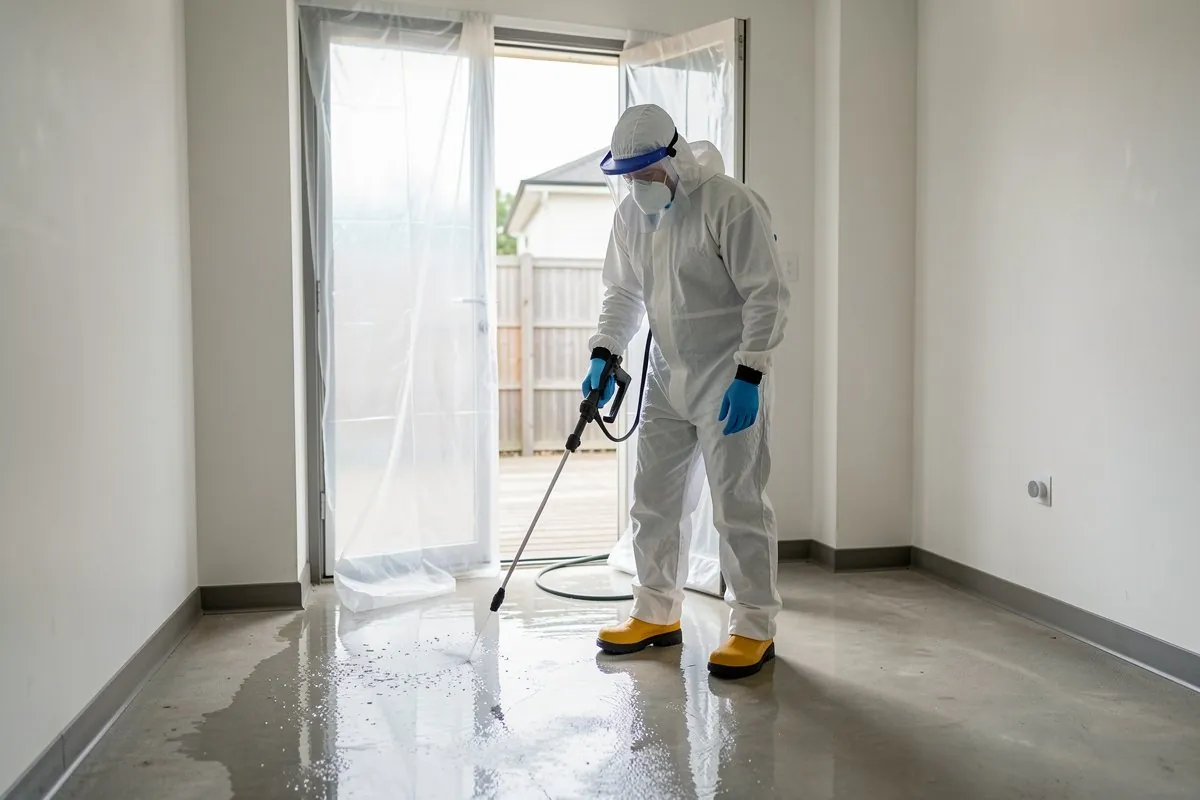
A toilet overflow, a floor drain backing up, or a sewer line clog can push contaminated water into a bathroom, laundry room, or basement. The visible water is only part of the problem. Sewage can carry bacteria, viruses, and parasites, and it can soak into materials that cannot be cleaned.
The instinct to grab a mop is understandable, but it is also how people expose themselves to a hazard and spread contamination into other rooms. The safer approach is to stop the source, limit access, document the damage, and bring in a crew equipped for category 3 water.
This guide covers the first steps and the questions to ask before cleanup begins.
Key takeaways
- Treat every sewage backup as contaminated water.
- Keep children, pets, and anyone with a weakened immune system away from the area.
- Do not run the HVAC or a household vacuum in the affected space.
- Shut off the water if a fixture is the source, and call a plumber for the blockage.
- Porous materials that absorbed sewage usually have to be removed, not dried.
In this guide
Why sewage is different
Restoration crews classify water by contamination level. Clean water from a supply line is category 1. Gray water from a washing machine or dishwasher is category 2. Sewage, outdoor flood water, and water from a toilet beyond the trap is category 3, often called black water.
The category changes the response. Category 1 water can often be dried in place. Category 3 water requires protective equipment, containment, antimicrobial treatment, and the removal of porous materials that cannot be cleaned. A carpet pad, drywall, or insulation that absorbed sewage is usually a discard, not a drying candidate.
That is why a backup is not a cleaning project. It is a contamination project with a drying phase at the end.
Health and safety risks
Sewage can contain bacteria such as E. coli, viruses, and parasites. It can also carry chemicals, food waste, and sharp debris. The risk is not only from drinking it; touching a contaminated surface and then touching your face, food, or a cut is enough to cause illness.
People with weakened immune systems, young children, pregnant people, and pets are more vulnerable. Keep them out of the area entirely. If anyone develops severe symptoms after exposure, contact a medical professional.
There are also physical hazards: slippery floors, standing water near outlets, and sewage that has reached a gas appliance or electrical panel. Do not enter a flooded basement or utility room if the water is near electrical equipment.
First 30 minutes: safe steps
- Keep people and pets out. Close the door and put a note on it if needed.
- Stop the source if it is safe. If a toilet or fixture is overflowing, shut off its supply. If the backup is from a floor drain or sewer line, do not keep flushing or running water.
- Protect the air. Turn off the HVAC if the return or supply vents are in the affected area. Do not run fans that blow air from the contaminated room into clean rooms.
- Document before cleanup. Take wide photos, close-ups, and a short video. Note the date, time, and what you saw. Do not move damaged items until they are recorded.
- Call your insurer and a cleanup provider. Ask whether the policy covers sewer backup; it is often a separate endorsement.
If the backup is caused by a blocked main line, a plumber may need to clear it before cleanup can begin. Cleaning the floor before the source is fixed just means it will happen again.
Do not wait for the smell
Sewage contamination is not always obvious. If a drain backed up, call (844) 609-3645 and describe what came up and which rooms are affected.
What not to do
- Do not use a household vacuum or shop vacuum. Standard vacuums are not designed for contaminated water and can aerosolize pathogens.
- Do not mop and call it clean. A mop can spread contamination into grout, baseboards, and adjacent rooms.
- Do not run the HVAC. It can distribute contaminants through the ductwork.
- Do not mix cleaning chemicals. Bleach and ammonia, for example, create a dangerous gas.
- Do not walk through the water in bare feet or socks. Wear waterproof boots and gloves if you must enter briefly.
- Do not throw away everything before documenting it. Photos support the claim; disposal can wait until the adjuster or provider has recorded it.
How professional cleanup works
A crew starts with containment. Plastic sheeting and negative air pressure keep spores, dust, and humidity from spreading into clean parts of the home. Technicians wear protective equipment and use tools dedicated to contaminated water.
Standing water is extracted, and porous materials that absorbed sewage are removed and bagged. Hard surfaces are cleaned, treated with an antimicrobial product, and dried. The cavity behind baseboards and the subfloor are checked with meters, because contamination often travels farther than the visible puddle.
Drying follows the same measured approach as any water loss: air movers, dehumidifiers, and daily readings. The difference is that the drying starts after the contamination is addressed, not before.
Insurance and documentation
Standard homeowners policies often exclude sewer backup unless you added a rider or endorsement. Call your insurer early and ask two questions: is sewer backup covered, and what is the claim limit? The answer determines how the work is scoped.
Document the source, the waterline, and every affected room. Keep a list of damaged items and photograph them before disposal. If the backup affected a rental property, notify the landlord or tenant in writing.
Do not sign anything with a cleanup company before you understand the scope and the price. A written estimate should separate extraction, disposal, cleaning, drying, and repairs.
Preventing the next backup
- Know whether your home has a backwater valve or check valve on the sewer line.
- Do not pour grease, coffee grounds, wipes, or feminine products down drains.
- Keep floor drains clear and have the line inspected if backups repeat.
- Have the septic tank pumped on the recommended schedule.
- During heavy rain, avoid running appliances that discharge to the sewer if the line is already stressed.
- Ask a plumber about a backwater valve if your basement or lowest floor has fixtures.
A backup that happens once can happen again. Fixing the cause is cheaper than cleaning up the same room twice.
Need local help in Tennessee?
Call (844) 609-3645 any hour. We will connect you with an independent local provider serving your ZIP code.
Call (844) 609-3645Questions homeowners ask
Is a sewage backup covered by homeowners insurance?
Often only if you carry a sewer backup rider or endorsement. Standard policies frequently exclude backup unless it is added. Call your insurer early and ask about the coverage limit and the documentation they need.
Can I clean up a small sewage backup myself?
Public health guidance generally treats sewage as contaminated water. A small spill on a hard, non-porous surface may be cleanable with protective equipment, but porous materials and any area larger than a small spill should be handled by a professional crew.
How long does sewage cleanup take?
Cleaning and disinfection usually take a day, and drying typically runs three to five days depending on the materials and how far the water traveled. Repairs are scheduled after the structure is dry.
What should I do with items that touched sewage?
Document them first. Porous items such as carpet, pad, cardboard, and upholstered furniture usually cannot be safely cleaned and should be discarded. Hard items may be salvageable after cleaning and disinfection, depending on the material.
Can sewage backup cause mold?
Yes. After the contamination is cleaned, any remaining moisture can support mold growth within 24 to 48 hours. That is why disinfection is followed by measured structural drying, not just a wipe-down.
Reviewed by the Tennessee Restoration Pros editorial team · Updated November 2026