Frozen Pipes in Tennessee: Warning Signs, Thawing, and Prevention
Tennessee does not need a long deep freeze to split a pipe. A short cold snap is enough, especially on an exterior wall, crawlspace, or garage run. Here is how to spot the warning signs and thaw safely.
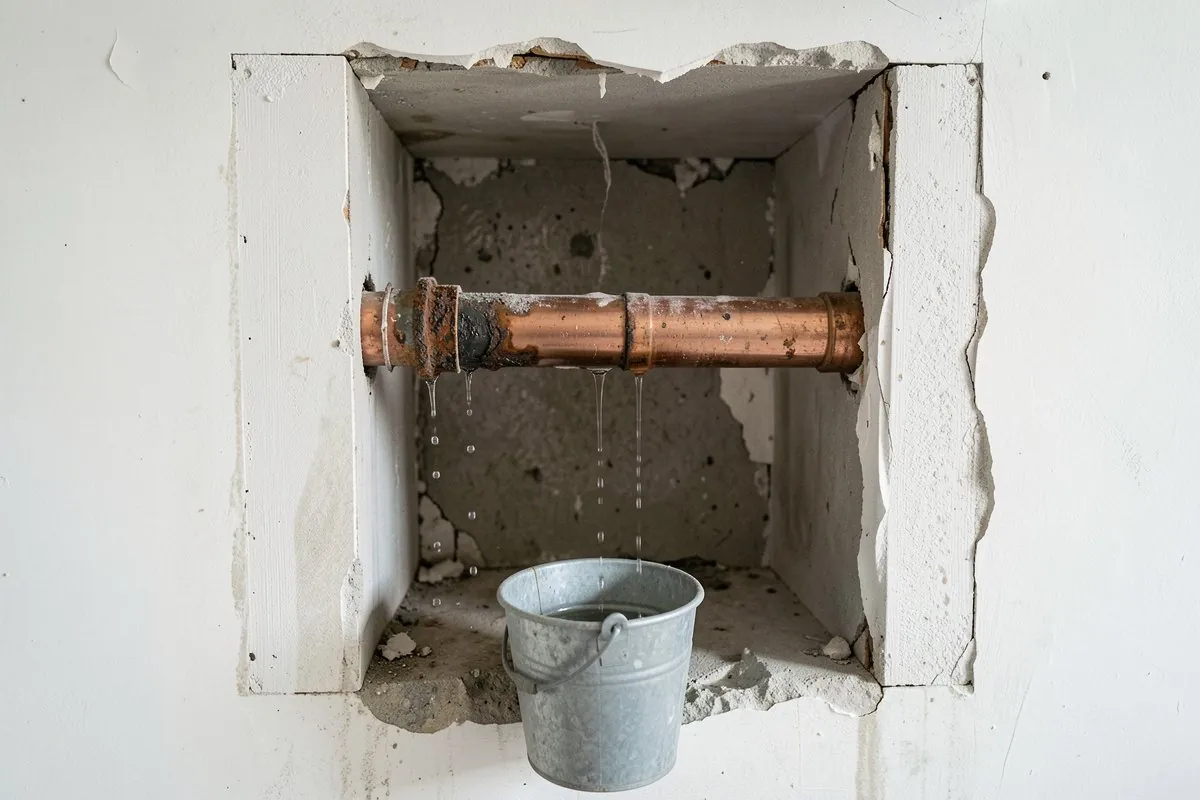
Tennessee's winters are inconsistent, and that is part of the problem. A stretch of mild weather can leave hoses connected, crawlspace vents open, and heat turned down. Then a hard freeze arrives overnight and the vulnerable runs are not ready.
A frozen pipe is not automatically a burst pipe. The danger comes when ice expands and cracks the pipe or a joint. When the ice thaws, water escapes into the wall, ceiling, or floor cavity, often for hours before anyone notices.
The steps below are written for homeowners. Stop at anything that puts you near electrical equipment or standing water, and call for help.
Key takeaways
- Exterior walls, crawlspaces, garages, and unheated attics freeze first.
- A pipe can split without visible damage until the ice thaws.
- Shut off the main water valve before thawing a suspected split.
- Never use an open flame, a blowtorch, or a high-output heater on a pipe.
- If water escapes, extraction and drying should start within 24 to 48 hours.
In this guide
Why Tennessee pipes freeze
Most homes in the state are built for mild winters, not sustained cold. Supply lines run through exterior walls, unheated crawlspaces, garages, and attics. Those spaces can drop below freezing while the rest of the house stays comfortable.
Older homes add risk. Galvanized steel corrodes from the inside, copper thins at soldered joints, and older plastic fittings become brittle. A pressure spike after the supply is restored can finish a joint that was already weakened.
Vacant homes, rental properties between tenants, and weekend cabins are especially vulnerable. If the heat is set low or off, a short freeze can do the same damage as a week of cold in a colder state.
Warning signs
- Frost or condensation on a visible pipe run.
- Water staining, bubbling paint, or soft drywall on a wall or ceiling.
- Hissing or running water when every fixture is off.
- A sudden jump in the water bill with no change in use.
- Damp carpet, lifted vinyl, or a spongy subfloor.
- A musty odor in a closet, hallway, or basement.
- Very low water pressure or no water at one fixture.
Some of these signs mean a pipe has already failed. Others mean it is frozen and may split when it thaws. Either way, the next step is the same: stop the supply if you can do it safely, then call for help.
What to do if a pipe freezes
- Shut off the main valve. If the pipe may already be split, closing the supply prevents a flood when it thaws. Open a low faucet to drain residual water.
- Open the cabinet doors. Warm room air can reach a sink run on an exterior wall. Keep the faucet open so melting water has somewhere to go.
- Warm the pipe slowly. Use a hair dryer, a portable space heater kept at a safe distance, or towels soaked in warm water. Work from the faucet end toward the frozen section.
- Watch for water. If you see a crack, a bulge, or water escaping, stop and treat it as a burst pipe.
- Call a plumber or restoration provider. A plumber repairs the pipe; a restoration crew extracts water and dries the structure. Some jobs need both.
If you cannot reach the frozen section, or if it is inside a wall or ceiling, do not open the wall yourself. A professional can locate it with less damage.
What not to do
- Do not use an open flame. A blowtorch, lighter, or charcoal fire can crack the pipe and start a fire.
- Do not pour boiling water directly on a frozen pipe. Thermal shock can split it.
- Do not use a household vacuum on standing water. It is not designed for water and can shock the operator.
- Do not run the HVAC if the water may be contaminated. It can spread moisture and contaminants through the house.
- Do not ignore a slow drip. A pinhole leak under a cabinet can soak the subfloor for days.
If a pipe bursts
Shut off the main valve first, then cut power to wet rooms at the breaker only if you can reach it from a dry spot. Move furniture and electronics away from the water, and photograph the source, the waterline, and any damaged items before cleanup.
Then call (844) 609-3645. A burst pipe can release water inside a wall cavity for hours, and the visible puddle is usually only part of the loss. Extraction, moisture mapping, and structural drying are the priority before mold has a chance to develop.
If the water reached carpet, pad, insulation, or drywall, those materials may need to be removed and documented. Keep the damaged pieces until the adjuster has seen them or the provider has photographed them.
Prevention checklist
- Insulate supply lines in crawlspaces, garages, attics, and exterior walls.
- Seal gaps around pipes where cold air enters, especially at rim joists and sill plates.
- Disconnect garden hoses and shut off outdoor spigots before the first freeze.
- Keep the thermostat at a minimum overnight instead of turning heat off.
- Open cabinet doors on exterior walls so warm air reaches the plumbing.
- Let a faucet drip during a hard freeze; moving water resists freezing.
- Have a vacant property checked every few days, or install a leak detector.
- Know where the main shutoff is and make sure it turns freely.
Tennessee freeze risk is not limited to midwinter. A short cold snap in November or March can be enough. The week before a forecast drop is the best time to check the vulnerable runs.
Need local help in Tennessee?
Call (844) 609-3645 any hour. We will connect you with an independent local provider serving your ZIP code.
Call (844) 609-3645Questions homeowners ask
At what temperature do pipes freeze in Tennessee?
Most unprotected supply lines begin to freeze when the temperature stays around 20°F (-6°C) or below for several hours. Exterior walls, crawlspaces, garages, and unheated attics cool faster than the rest of the house.
How do I know if a frozen pipe has already burst?
Look for water staining, a bulge, frost with a wet patch, or water escaping when the pipe begins to thaw. A sudden drop in water pressure or the sound of running water with every fixture off are also warning signs. Shut off the main valve before investigating further.
Should I leave the water on or off while a pipe is frozen?
If you suspect the pipe is split, shut off the main valve and open a low faucet to drain residual water. If you are confident it is frozen but intact, keep the faucet open and thaw slowly. When in doubt, shut it off.
Will homeowners insurance cover a burst pipe?
Sudden and accidental water damage from a burst pipe is commonly covered under standard policies, while damage from a gradual leak or freezing that was not addressed may be excluded. Photograph everything and review your policy wording with your adjuster.
How fast should water be extracted after a pipe bursts?
As soon as the source is stopped. Water wicks into drywall, insulation, and subfloor within hours, and mold can begin to develop within 24 to 48 hours. Extraction and drying on the same day give the structure the best chance of being saved.
Reviewed by the Tennessee Restoration Pros editorial team · Updated November 2026